
The UFC's BJJ Takeover: A Masterclass in Monopolization
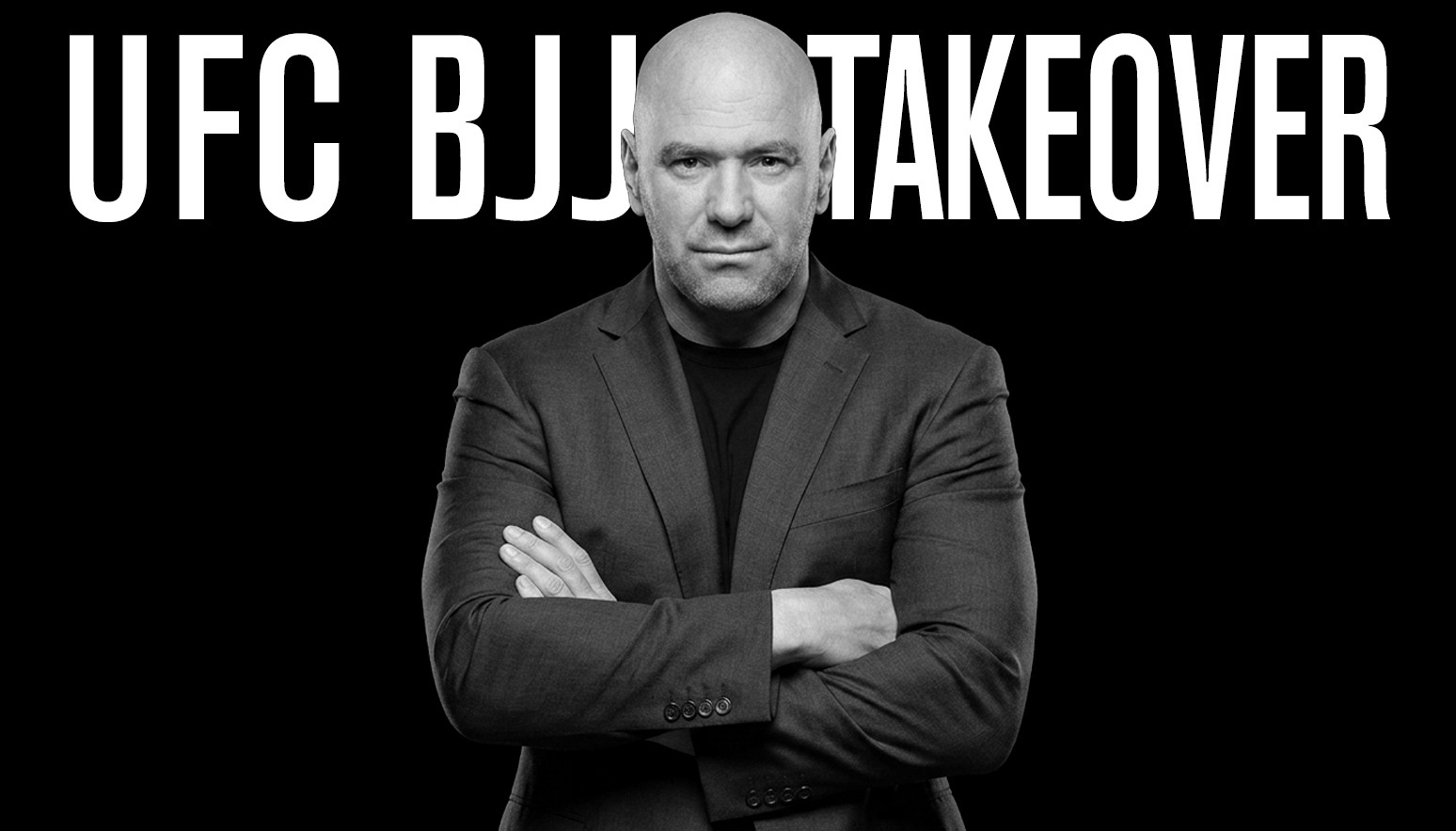
The UFC BJJ Blueprint: Disrupting the Grappling Ecosystem & The Fight for Monopolization
The Ultimate Fighting Championship (UFC) has officially thrown its massive corporate weight into the grassroots and professional grappling landscape. Through their newly announced "UFC BJJ Opens" pipeline, the promotion has laid out a highly linear, corporate ladder for competitive Jiu-Jitsu: Competing at BJJ Opens ➔ Prove You Belong at the Highest Level ➔ Competing on UFC BJJ ➔ Become UFC BJJ Champion. Complete with a custom-designed UFC BJJ championship belt styled heavily after their mixed martial arts (MMA) titles, this isn't just a tournament circuit—it's a deliberate attempt to vertically integrate the sport of Brazilian Jiu-Jitsu.
By creating a closed loop from local tournaments to high-level broadcasted championships, the UFC is attempting to apply its highly successful MMA business model to the historically fragmented world of competitive grappling.
But what does this corporate intrusion actually mean for athletes, local gyms, and legacy promotions like FloGrappling, the IBJJF, ADCC, and CJI? Based on combat sports history and strict business realities, here is a deep dive into how this move will shift the landscape, who wins, who loses, and whether this ambitious venture will succeed or plummet.
1. The Interpromotional Domino Effect: FloGrappling, IBJJF, ADCC, & CJI
For decades, Brazilian Jiu-Jitsu has operated under an open-market structure. Competitors choose where to compete based on prestige, rule sets, and cash compensation. The UFC ecosystem thrives on the exact opposite: absolute brand dominance and exclusive intellectual property. If the UFC enforces its traditional corporate playbook, it will create massive structural friction with existing major players:
• FloGrappling and the Fight Pass War
FloGrappling currently holds a near-monopoly on streaming elite competitive BJJ, retaining broadcast rights for IBJJF majors, Who’s Number One (WNO), and various high-profile super-fights. The UFC intends to leverage its proprietary platform, UFC Fight Pass, to broadcast the UFC BJJ Opens and championship events. As the UFC draws elite talent into its loop, FloGrappling faces an existential content drain. Historically, when the UFC moves into a combat sports vertical, it easily pulls casual viewership away from niche streaming networks by bundling grappling directly into an existing subscription service with millions of active global users.
• The IBJJF Dilemma: Prestige vs. Financial Viability
The International Brazilian Jiu-Jitsu Federation (IBJJF) is the traditional standard for legacy and ranking, but it has faced decades of athlete backlash for its lack of compensation—often paying zero prize money to competitors winning regional opens. The UFC BJJ Opens present an immediate threat to IBJJF's primary business model: amateur registration fees. If a regional competitor must choose between paying $150 to enter an IBJJF Open (which offers prestige but no direct path to professional stardom) or a UFC BJJ Open (which explicitly guarantees a televised professional pathway), thousands of sub-elite and elite competitors will pivot to the UFC track for exposure.
• ADCC and CJI: The Elite Outliers
The Abu Dhabi Combat Club (ADCC) and the Craig Jones Invitational (CJI) represent the absolute pinnacle of elite submission grappling. Their structural defense against a UFC takeover lies in their distinct formats. ADCC offers historical legacy and a brutal, wrestling-heavy ruleset, while CJI has disrupted the ecosystem by offering unprecedented $1 million cash prizes. The UFC is highly unlikely to match a $1 million single-bracket payout for grappling immediately. Therefore, unless the UFC forces restrictive contracts that legally ban athletes from competing in these mega-events, ADCC and CJI will likely remain insulated from the UFC's reach.
2. What This Means for Athletes, Gyms, and Coaches
The introduction of UFC infrastructure creates a highly polarized environment for the actual practitioners and businesses driving the sport.
For Athletes: The Exclusivity Trap
The most critical question hanging over this graphic is the implementation of restrictive contracts. Historically, the UFC does not allow its contracted MMA fighters to compete in outside promotions without explicit, rare exemptions.
-
The Better: If athletes enter the UFC BJJ system, they will receive unprecedented mainstream marketing exposure, regular competition cycles, professional production values, and steadier secondary sponsorship opportunities through UFC partner brands.
-
The Worse: Grapplers may find themselves trapped in low-tier exclusive contracts. If the UFC pays standard initial Fight Pass rates (historically low compared to elite boxing or CJI prizes), athletes lose their leverage to take high-paying independent super-fights or seminar tours elsewhere, effectively capping their earnings while monopolizing their athletic prime.
For Gyms and Coaches: Fragmentation of Alliances
Traditional BJJ operates via massive global teams (e.g., Alliance, Atos, New Wave, B-Team, Checkmat). These academies generate revenue through student memberships and seminar circuits driven by their champions' accolades. If the UFC BJJ system establishes dominance, the traditional team points system at tournaments matters less than individual athlete placement on Fight Pass. Furthermore, if a gym's top competitor is barred from competing in an IBJJF event due to a UFC contract, the gym's collective competitive presence is diluted, creating friction between institutional coaches and athletes chasing UFC infrastructure.
3. Historical Precedents: Lessons from the MMA and Kickboxing Wars
The UFC’s expansion strategy is pulled directly from historical blueprints. Looking at historical data from combat sports acquisitions and expansions provides a clear roadmap of how this will likely play out:
• The Elimination of MMA Competition (PRIDE, Strikeforce, WEC)
In the 2000s, the MMA landscape was highly fragmented. PRIDE Fighting Championships held the elite heavyweight division, WEC controlled lighter weight classes, and Strikeforce maintained strong broadcast relationships with Showtime. The UFC’s parent company systematically purchased these organizations, dissolved their independent branding, and absorbed their talent into a single monolithic structure. This eradicated athlete bargaining power, established a singular championship standard, and capped fighter pay at a fraction of total promotional revenue. The UFC wants to achieve this exact baseline of total control with BJJ.
• The Kickboxing Monopolization Failure (GLORY vs. Regional Ecosystems)
Conversely, corporate attempts to completely centralize kickboxing under a single global banner (such as GLORY Kickboxing during its peak capital investment phase) frequently sputtered. Kickboxing relied on localized, deeply entrenched regional circuits (K-1 in Japan, European domestic events). When corporate entities attempted to force rigid, exclusive global contracts without matching the domestic popularity and localized promoter relationships, athletes frequently defected or retired, causing the centralized model to contract significantly. BJJ is highly decentralized and culturally organic, meaning it shares many vulnerabilities with the kickboxing model.
4. Strategic Forecast: Will UFC BJJ Succeed or Plummet?
To accurately forecast the outcome of this venture, we must separate the grassroots regional system from the elite professional layer.
Why It Will Succeed at the Grassroots Level
The "UFC BJJ Opens" will almost certainly succeed as a business vertical at the amateur and regional level. The UFC brand possesses unparalleled consumer awareness. An amateur or local purple belt will gladly choose to register for a "UFC BJJ Open" over a localized independent tournament because the visual currency of competing on a UFC-branded stage is immensely valuable for their personal branding, local gym marketing, and social media presence. The tournament registration fees alone will ensure the regional system is highly profitable for the promotion.
Why It Faces Structural Hurdles at the Elite Level
The project faces a steep, uphill battle to replace true "World Championships" at the elite professional level due to three major market factors:
-
The Capital Disconnect: With the Craig Jones Invitational (CJI) proving that the elite tier of the sport can command $1,000,000 show money via alternative funding structures, the UFC cannot expect elite competitors to sign away their career freedom for standard promotional payouts. If the UFC attempts to pay BJJ champions the same entry-level wages seen on the MMA side, the absolute best grapplers will simply decline the contracts.
-
The Rule Set and Culture Problem: Elite BJJ practitioners and hardcore fans are notoriously particular about rule sets. If the UFC forces a highly sanitized, television-friendly rule set that penalizes complex modern guards or strategic stall tactics artificially, it risks alienating the core audience and elite competitors who view the rules as a bastardization of pure grappling.
-
The Professional Grappling Market Cap: Pure submission grappling, while growing rapidly, historically struggles to pull casual pay-per-view numbers. If the UFC treats this purely as cheap content to populate Fight Pass programming hours rather than investing heavy promotional capital into building individual BJJ superstars, the elite championship tier will plateau into a niche sub-category.
The Final Verdict
The UFC BJJ Opens will succeed as a profitable amateur tournament circuit and a developmental feeder system, but it will fail to fully monopolize or replace the cultural prestige of ADCC, CJI, or traditional IBJJF World titles in the near-to-mid term.
Unless the UFC is willing to break its historical corporate mold by offering high-paying, completely non-exclusive contracts to elite stars, the grappling community will treat the UFC BJJ title as a highly polished promotional accolade rather than the definitive marker of the world's best grappler. It will alter the landscape by establishing a highly visible corporate alternative, forcing legacy organizations like the IBJJF to innovate, but the decentralized, multi-promotional nature of professional Jiu-Jitsu will ultimately survive the UFC's first major corporate siege.
Explore Popular Articles

The UFC's BJJ Takeover: A Masterclass in Monopolization
The UFC BJJ Blueprint: Disrupting the Grappling Ecosystem & The Fight for Monopolization The Ultimat...

Lucas Leite Announces Departure from Checkmat After 18 Years
End of an Era: Lucas Leite Announces Departure From Checkmat A monumental shift is happening in the...

The Death of CJI: Why Craig Jones Walked Away and What Happens to BJJ Now
The professional grappling world has just been hit with a massive reality check. After completely di...

Three Decades of Discipline: Celebrating Master Cleber Luciano
Mastering the Art: Cleber Luciano Ascends to 1st Degree Coral Belt In the storied halls of Brazilian...