
Moya: The Untold Story. 15 Years in the Making.
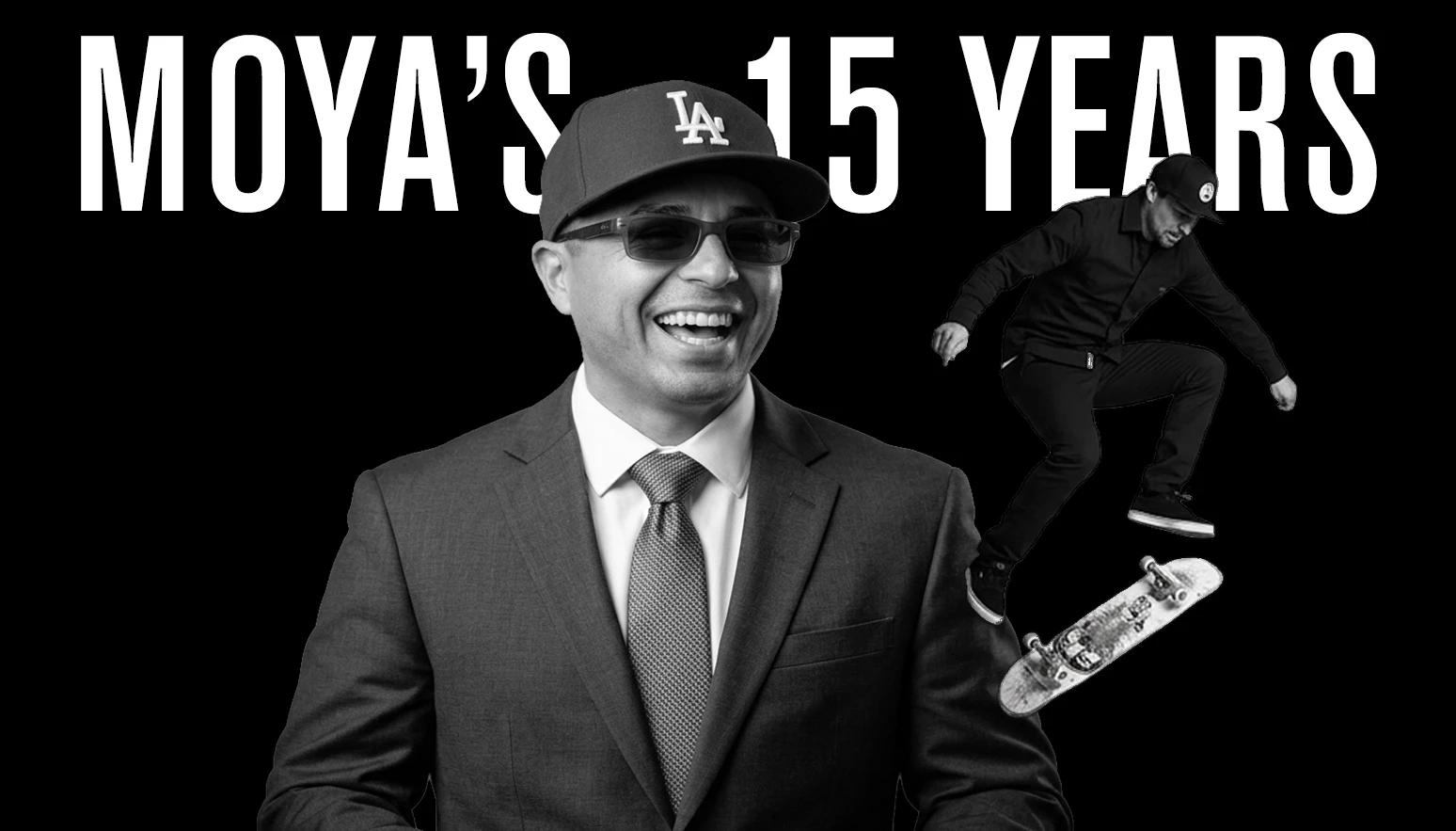
The Struggle Was Real, The Legacy Is Permanent: 15 Years of Moya
When you see a brand fully woven into modern Jiu-Jitsu culture, it's easy to assume it just fell into place overnight. You see the clean aesthetic on the mats, the elite athletes, the global reach, and you think "corporate machine." But look closer at the roots of Moya Brand Co, and you'll find something that looks a lot less like a corporate blueprint and a lot more like a gritty California hustle mixed with deep island pride.
As we cross our 15-year milestone, it's time to pull back the curtain — from our crossover origins and pure-legwork beginnings to the quiet impact we've made for the communities, the icons, and the kids who represent the future of the sport.
American-Owned in a Sea of Imports
The Jiu-Jitsu market is saturated. The vast majority of brands out there are based overseas or run as faceless drop-shipping setups with no real roots in the United States. They sell to the American market, but they don't live here, create here, or give back here.
Moya is part of the rare group of true homegrown, American-owned and operated Jiu-Jitsu companies. When you buy Moya, you aren't funding a detached corporate entity across the ocean. You're supporting an authentic American company that keeps the culture, the business, and the hustle right here on home soil.
Born and Bred in LA: The Two-Man Hustle
Long before the global expansion, Moya was born out of a raw energy you only find in Southern California, infused with a distinct Pacific heritage. To this day, we remain the only premier Jiu-Jitsu brand born, bred, and fully based out of Los Angeles.
Fifteen years ago, we didn't start with a venture capital injection or a corporate blueprint. We started with an international vision — and a two-man squad in reality. When the two founders first met, the alignment was instant. One handled sales; Phonebooth took complete ownership of marketing, design, and networking. Pure, old-school teamwork, and we did nothing but the heavy legwork ourselves.
The Discipline Behind the Brand
In those early days, the owners didn't take a dime. Under Jesse's sharp business discipline, every dollar went straight back into the brand or directly out to our crew. Long before we ever cut a check for ourselves, our athletes were already getting paid.
We put money in the fighters' pockets and protected the team over our own gain. That's why, after 15 years, Moya's reputation remains unblemished. In a business notorious for burning bridges, our word is ironclad.
With that foundation locked down, the grind was relentless.
The broken shoot that started it all. When it came time to shoot our very first product layout, we tried the traditional route. Jesse brought in a close friend, a professional celebrity photographer in LA. On the day of the shoot, the photographer no-showed. Instead of scrapping it, Jesse picked up the camera himself, lined up the shots, and captured the gear right there. He sent the raw photos to Phonebooth, and the feedback was electric — clean, raw, authentic. That was the epiphany: we didn't need Hollywood agencies to dictate our look. We could do it ourselves.
The skateboard, the camera, and the laptop. From that moment on, Phonebooth took the creative reins with nothing more than those three tools.
Coming directly from the legendary Marc Laimon MMA team — the crew that dominated the formative era of The Ultimate Fighter with icons like Joe Stevenson, Kendall Grove, Jay Hieron, Jason "Mayhem" Miller, Phil Baroni, Roy "Big Country" Nelson, and Troy Mandaloniz just to name a few — he brought that unfiltered fighter mindset straight to the pavement.
He skated from city to city, dropping into local gyms, skate parks, and surf line-ups while networking at competitions. Living couch-to-couch, he captured every photo and edited the entire marketing machine from wherever he could lay his head.
The sales hustle. Jesse anchored the team on sales, coming directly out of another prominent Jiu-Jitsu company. He knew the internal landscape inside and out — but more importantly, he knew the industry lacked style and design. Phonebooth saw the exact same gap. Armed with that insight and world-class sales execution, Jesse managed the grind, packed the orders, and ran our international sales strategy with sharp discipline.
The Roots: LA Streets Meet Pacific Heritage
What set Moya apart from day one was our visual DNA. One of our original owners traces their roots directly back to the island of Guam, creating a cultural bridge that defined the brand. That Pacific connection was met by a deep Southern California lineage on the other side — Jesse comes from three generations of strong Mexican-American heritage right here in LA.
Through genuine respect and real relationships with the Pacific Island community, we built ironclad friendships across the islands. That organic bond is exactly how we cracked open the heavy, insular world of the surf industry.
Moya became the melting pot where West Coast grit, multi-generational Mexican-American roots, and deep island lineage breathed a fresh aesthetic into the fight game — an upscale, authentic style that couldn't be faked.
Fusing Subcultures: Skate, Surf, and Jiu-Jitsu
Before Moya, the Jiu-Jitsu landscape visually sucked. Traditional gear was functional, but it lacked a cultural pulse. We looked at the mats, looked out at the streets of Cali, and realized something vital: the mindset of a skater, a surfer, and a martial artist is fundamentally the same. Independence, flow, discipline, counter-culture expression.
So Phonebooth didn't pull from traditional martial arts for inspiration. His visual direction came straight from the raw pages of skate and surf culture.
"Jiu-Jitsu photography was stuck in an old-school, aggressive time warp. Every ad featured athletes crouched in a dark room, mean-mugging the camera. It looked corny as hell. We chose the exact opposite direction — I took our athletes outside into the California sun, threw shades on them, and captured them laughing. The most important element was that everyone was smiling. We didn't need the manufactured tough-guy act. The authenticity of the lifestyle spoke for itself." — Phonebooth
Because of that shift, Moya was the first-ever Jiu-Jitsu brand to inject raw skate/surf streetwear style into the sport. We shattered the old mold and brought that premium street lifestyle straight into the academy. The moment Moya dropped, it took off and reshaped the visual identity of the entire sport. Others still try to copy what we do, but they can't replicate our DNA. We weren't just making gear for an hour of sparring — we were making apparel for the lifestyle you lived the other 23 hours of the day.
Catering to the Future: The First Brand for the Kids
While other brands focused entirely on adults, Moya saw another void. No one was giving kids the same premium design, technical quality, and cultural style.
Moya was the first Jiu-Jitsu brand to actively cater to kids. We didn't just scale down adult designs as an afterthought — we built custom, high-tier gear specifically for the next generation. That's why we still make a dedicated kids' version for every single product release to this day.
Real Star Power: A Legendary Reputation
Because of our lifestyle crossover, Moya caught the attention of the wider world, leading to historic collaborations that bridged technical craftsmanship with global pop culture. We partnered with Sanrio (Hello Kitty) and fused New York street art with the Keith Haring Foundation.
But the reach goes far beyond partnerships. Over the years, our gear has been worn and backed by names most brands in this sport never get anywhere near — from UFC heavyweight legend Cain Velasquez and Ronda Rousey in the early days, to Jason Momoa, Nick Jonas, and Wiz Khalifa on the music and Hollywood side. Our gear has even appeared on two Netflix shows — the internationally streamed Korean series As You Stood By and Kingdom — putting Moya in front of audiences well beyond the mats, something no other brand in this sport can say.
Our roots in the water run just as deep. Through our genuine ties to the Pacific Island community, we sponsor heavy-water charger Eli Olson and stand alongside legends like Kala Alexander, Bobby Martinez, and Dustin Barca. To this day, we're proud to remain the only Jiu-Jitsu brand to put its name behind a professional surfer.
We don't "sponsor" people for quick marketing points — we choose our family based on character and longevity. Because our standard of care and integrity speak for themselves, people come to us on their own — and we stay humbled by every one of them. Real love!
The Side You Won't Find in the Store
Not everything we make ends up on the website. Behind our consumer line, we build professional-grade gear for the people who live in the sport full-time — made for the room, not the shelf. Today, Moya holds contracts with our military and select MMA events, along with private-label manufacturing for events, gyms, and combat-sports organizations.
Built Right, Sourced Right
After fifteen years, we've learned that quality comes from knowing exactly where and how each piece should be made — and refusing to cut corners on either.
Our apparel is produced right here in the USA, keeping our design, our standards, and our hustle on home soil. For our technical gear, we go where the craftsmanship is unmatched: our gloves and leather goods are built by some of the most skilled combat-equipment makers in the world, using materials and construction designed to survive the demands of a real fight — not a display shelf.
The True Core: Quietly Giving Back
If you ask us what we're most proud of over the last 15 years, it isn't the collaborations or the star power. It's the community.
Over the last decade and a half, we've consistently donated to charities, independent athletes, families, and local gyms — without shouting it from the rooftops for clout. Whether it's covering registration fees for an up-and-coming competitor who can't afford them or helping a local gym keep its doors open, Moya has always been about lifting people up.
Over a fifteen-year journey, athletes grow and paths naturally diverge — that's the nature of the sport. But our commitment never changed. Our legacy isn't built on collecting gratitude. It's built on giving real, unconditional support when it mattered most.
Where We Are Now
Fifteen years later, Moya is an established global powerhouse. What started with Phonebooth grinding creative on a skateboard and Jesse executing an industry-shifting sales strategy has grown into something permanent.
As much as things change, our core stays the same:
- Still 100% independent and based in Los Angeles.
- Still fiercely proud of our Island, Mexican-American, and LA roots.
- Still entirely dedicated to the gyms, families, and athletes who built us.
Thank you to every single person who's been part of this 15-year ride — the athletes, the gyms, the families, and everyone who ever repped Moya on and off the mats. You didn't just support a brand. You built one.
And to anyone just finding us now: the hand is always extended. Whether you've been here since day one or you're stepping onto the mat for the first time, there's a place for you in this family. That's what the last fifteen years were about, and it's what the next fifteen will be about too.
Thank you, Team Moya
Explore Popular Articles
Moya's Young Guns Making Noise 2026 ADCC Worlds
Dominance on the World Stage: Moya Young Guns Shine at the ADCC Youth World Championship When the ma...
Moya: The Untold Story. 15 Years in the Making.
The Struggle Was Real, The Legacy Is Permanent: 15 Years of Moya When you see a brand fully woven in...

Heroes get remembered, but legends never die
LEGENDS NEVER DIE: TOM KNOX ON SKATE PIONEERING AND THE ART OF THE GRIND At Moya Brand, we’ve always...
Max Holloway Leaves Las Vegas Victorious (But Leaving Us Wanting More) UFC 329
The Cursed Comeback: McGregor's Heartbreak and Pimblett's Lightning Strike at UFC 329 If you blinked...